
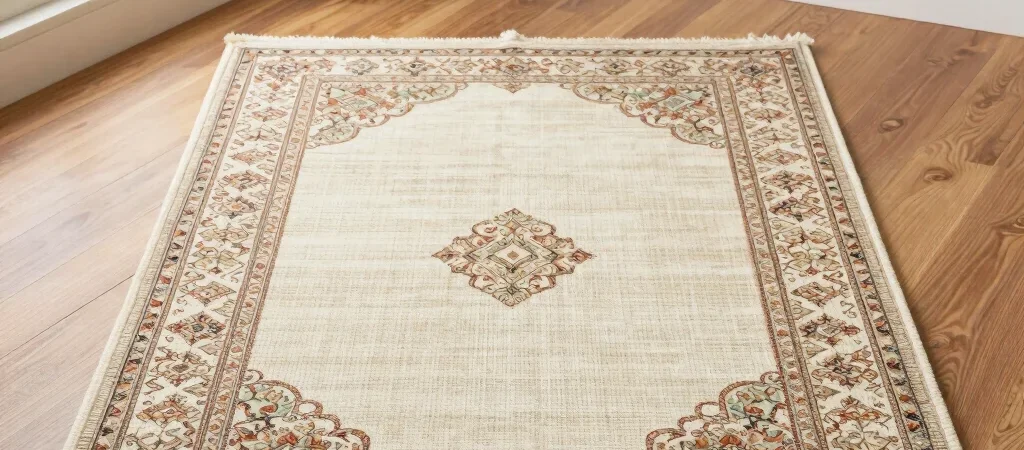
The rug that looks lovely in a product photo may feel quite different when it arrives: pile can appear thicker or flatter, and a pattern can read busier at home than on a screen. I like to pause at that gap between first impression and everyday use. A prayer rug is a personal choice, but a few practical details make the choice clearer.
Start with comfort and size
Look for measurements rather than relying on a cropped photo, especially if you have a particular amount of floor space in mind. Consider how the rug feels under your knees and forehead, and whether its backing is suitable for the surface where you’ll use it. If it will sit on smooth flooring, a separate rug pad may help keep it in place.
Material descriptions can help you compare options, but they don’t tell the whole story of softness or structure. Read the care label before choosing: a piece that needs delicate handling may not suit a household where it will be folded and put away often. When available, customer photos can offer a more grounded sense of scale and color than polished studio images.
Choose a pattern you can live with
A small repeat or a restrained border often sits quietly in a room, while a high-contrast motif can become its focal point. Neither is automatically better; the question is whether you want the rug to blend with your space or bring in a distinct note of color. Compare the listed colors with the room’s actual light, since a warm ivory may look quite different near a cool window.
I’d shortlist two or three rugs, then compare their dimensions, materials, and care instructions side by side before following the one that looks most striking. That small pause makes an aesthetic recommendation more useful, not less. Some links in this article may be affiliate links; if you purchase through them, I may earn a commission at no additional cost to you.